The words were never hers. They were everyone else’s, carried home by little ears
“Gummie, what are you going to do today?” my seven-year-old granddaughter and my sole reason for living asks, her face scrunched in concentration as her marker draws intricate lines that swerve in and out of the box, cyclical in a way I can’t look away from. “I’m writing,” I answer. “Oh, so nothing.” Quick as a whip, this little girl. It takes me a second, my heart slamming against my ribs before sinking slowly into my stomach like a stone. “Um, okay,” I manage.
I know those aren’t Boopie’s words. They’re what she’s heard walking through her own home, or sitting quietly while relatives talk, believing the smartest girl on the planet isn’t listening. Of course she was.
No one says it to my face. That’s the part that stings. They’re all big and brave behind my back, trusting that little ears will carry it straight to me. It isn’t clumsiness. It’s a choice, made by people who know exactly what children repeat. I’ve learned, the hard way, to trust no one with the unfinished parts of what I do.
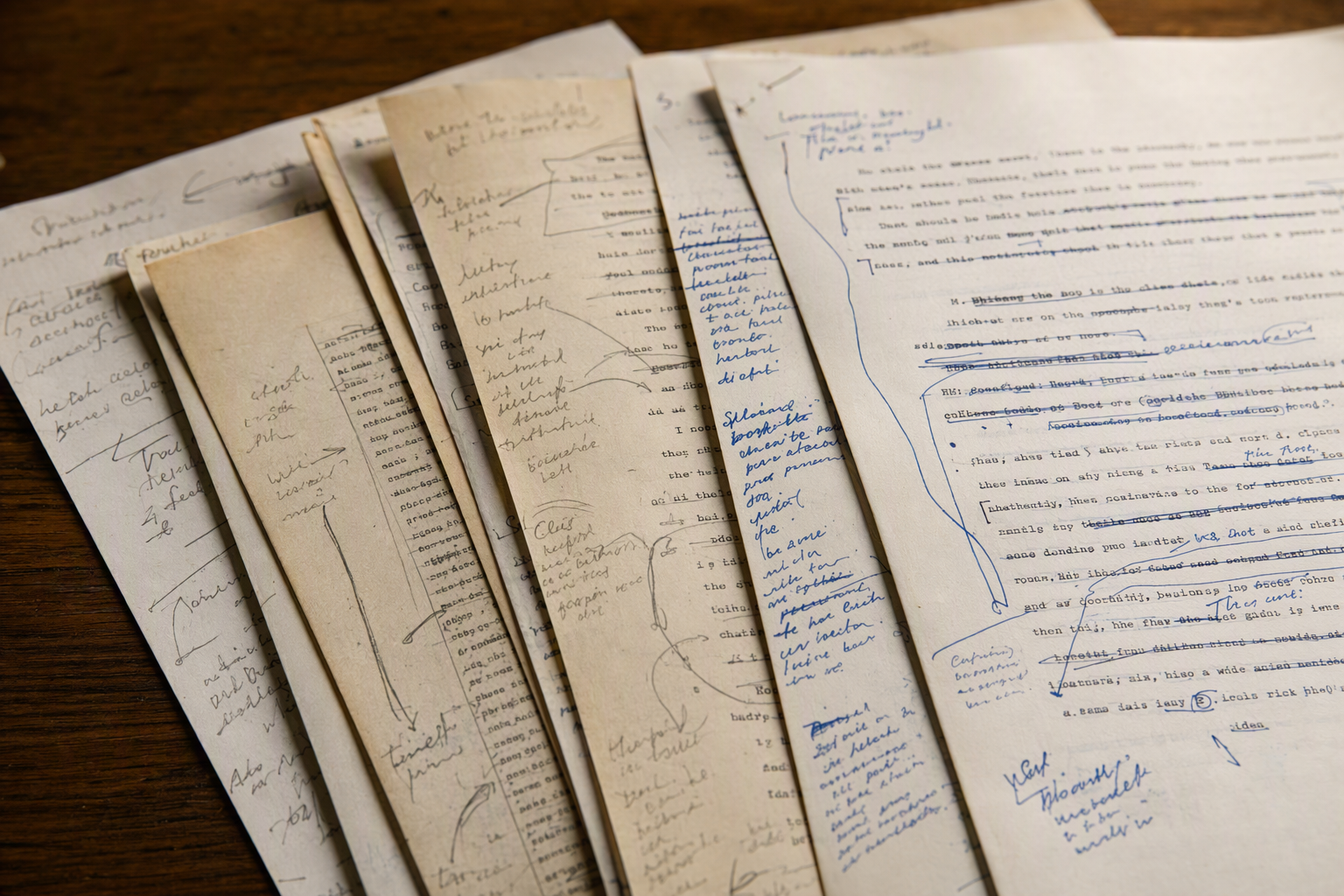
And the work was never small. I just finished the third draft of a novel, untangling beats that trace back generations, building a pipeline of consequence stretching further than I expected when I started. I repurposed my own muse into a character, lived with him, and then killed him off, because the story demanded it and I’d learned not to argue with what a story demands. Now I’m eight days and fifteen blog posts away from diving into draft three of the one book I swore I’d never write. Damn you, Grace Kellaway, in a good way.
None of that counts, apparently. “Anyone could write a book,” someone will say. “Anybody could write a short story. But why would they?” It sounds like a concession and lands like a dismissal. It grants that the thing is possible while insisting it isn’t worth doing. That’s the real shape of the invisibility cloak. It was never just that people can’t see the work while it’s happening. It’s that they refuse to call it work at all until it’s already a finished, undeniable thing in their hands. They only recognize the garden once they can see the seeds sprouting. Until then, as far as anyone around you is concerned, you were never planting anything.
So when my granddaughter asks what I’m doing today, I think about how she and her nine-year-old brother kept asking if they can read my stuff. “When you’re older,” I tell them, every time. One day they’ll understand what I was actually doing all those afternoons I said I was writing. For now, she goes back to her swerving lines. I go back to mine.
—C.M. Seybolt
Leave a Reply